When addy.io forwards an email to you, the message is set up so you can reply and the original sender will see your alias address, not your real email. In most cases you simply click Reply in your email client; the correct address is already in the message. This article explains how that works, what you need before replying, how to confirm a reply was sent, and what to do if something goes wrong.
Replying from an alias requires a Lite or Pro subscription. It is not included on the Free plan.
To start a new conversation (without replying to a forwarded message), see Sending email from an alias instead.
Before you reply
Make sure the following are in place:
- Plan - Replying from an alias requires a Lite or Pro subscription (not available on the Free plan). See pricing and Why are some features paid only?.
- Verified recipient - You must send the reply from a verified recipient address on your addy.io account (the inbox that received the forwarded email). If you send from another address, the message will not be sent from your alias and will instead be forwarded back to you as if from an external sender.
- Reply/send allowed - That recipient must be allowed to reply and send from your aliases. This is enabled by default.
- Active alias - The alias must exist and be active. If it has been deactivated or deleted, replies will fail until you restore or reactivate it.
How to reply
- Open the forwarded email in your email client or webmail (Gmail, Outlook, Apple Mail, etc.).
- Click Reply (or Reply all if you need to include other recipients).
- Your client should fill the To field with a special address (see below). Do not change it to the sender's normal email address unless you intend to contact them directly and reveal your real address.
- Write and send your message as usual.
addy.io receives your reply, sends it from your alias, and delivers it to the original sender. They see your alias in the From field, not your recipient address.
How the reply address works
Each forwarded email has a From header that encodes who sent the original message and which alias received it. It looks like this:
From: <shop+hello=store.com@johndoe.addy.io>
In this example:
- hello@store.com is the person who emailed you
- shop@johndoe.addy.io is the alias that forwarded the message to you
When you click Reply, your email client uses that address as the recipient. addy.io decodes it and delivers your reply to hello@store.com from shop@johndoe.addy.io.
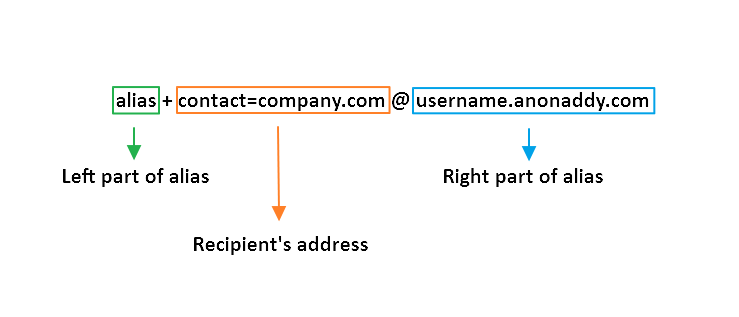
This works the same way for standard, shared-domain, and custom-domain aliases, additional usernames, and addresses with plus extensions (e.g. hello+tag@example.com).
Will the recipient see my real email?
No. The message is sent from your alias; your verified recipient address is not shown to them.
Your email client's Sent folder will still show your real (verified recipient) address as the From address. This is normal. You send the reply from that inbox to the addy.io mail server. addy.io then sends it on from your alias to the destination. The person who receives the email sees only your alias in the From field, not your real address.
Avoid putting identifying details in the message body or signature (such as your real name or personal email) if you want to stay anonymous. See also the FAQ.
Check that your reply was sent
In the addy.io dashboard, go to Aliases and find the alias you replied from. If the reply was handled successfully, the reply count for that alias will increase.

If the count does not change, see Having trouble replying? below.
Forwarded email banner
Forwarded messages include a banner (for example, "This email was sent to…"). addy.io removes this banner automatically when you reply, so the recipient does not see it. Do not edit the banner text in the quoted part of your reply, as that can prevent it from being stripped correctly. You can remove it manually from the quoted text if you prefer.
Encrypted replies
If you use GPG/OpenPGP, you can encrypt replies. See Sending an encrypted reply/send from an alias and Encrypting a reply/send with the addy.io public key. addy.io also removes attached public keys and signatures from replies so you do not accidentally expose your real identity.
Having trouble replying?
The reply comes back to me instead of the other person
You are probably sending from an address that is not a verified recipient on your account. addy.io treats the message like any other incoming mail and forwards it to you again.
Check your email client's Sent folder and confirm which address it used. It must match a verified recipient on addy.io. See the FAQ.
The reply is rejected
If you see 550 5.1.1 Recipient address rejected: Address does not exist, the alias may have been deleted or does not exist yet (and catch-all is not enabled). Restore or create the alias before replying.
If you receive an email with the subject "Attempted reply/send from alias has failed", your verified recipient's domain may not pass DMARC checks (this refers to your recipient address on addy.io, not your custom alias domain or the person you are emailing). Popular providers (Gmail, Outlook, Proton Mail, etc.) usually already have DMARC in place. See the FAQ for details.
Red "may have been spoofed" banner on the forwarded email
addy.io adds this when an incoming message fails authentication checks (often misconfigured SPF/DMARC on the sender's side). You can usually still reply safely; check the X-AnonAddy-Authentication-Results header if you want to see why the warning was added. See the FAQ.
Related articles
- Sending email from an alias - start a new email without replying first
- Allowing or disallowing a recipient to reply/send
- Updating an alias display from name - change the name recipients see when you reply